
EU Energy Dependence Exposed by Middle East Crisis
The EU is facing renewed energy pressure as the Middle East crisis pushes up costs and exposes its reliance on imported fuels.
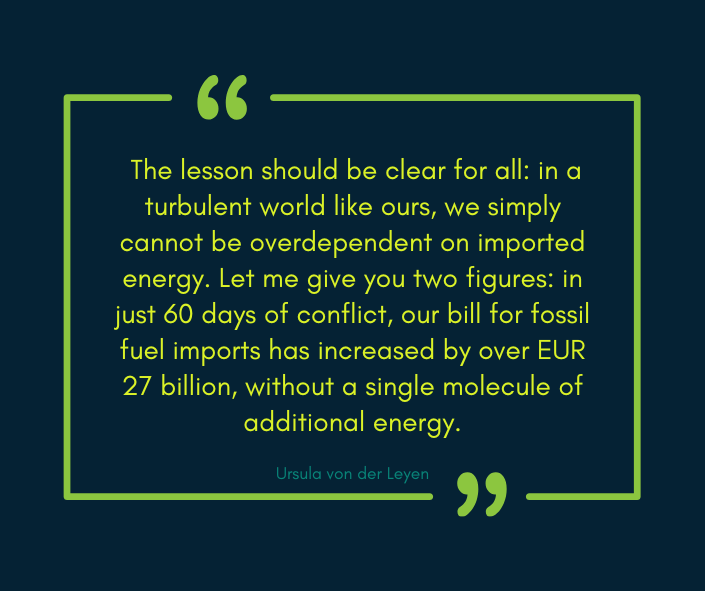
Speaking in the European Parliament, Ursula von der Leyen said the conflict has already added more than €27 billion to Europe’s fossil fuel import bill in just 60 days, without any increase in supply.
Disruption around the Strait of Hormuz—a key route for global oil and fuel shipments—has tightened markets, with particular pressure building in jet fuel and diesel, where availability is becoming more constrained.
The situation has highlighted a familiar weakness. Europe remains heavily dependent on imported fossil fuels, leaving it exposed when global supply routes are disrupted. According to the Commission, this is now the second major energy crisis in just four years driven by external shocks.
In response, the EU is stepping up coordination across Member States, including joint management of fuel reserves, gas storage, and refinery output, to reduce competition and stabilise supply.
At the same time, the bloc is doubling down on efforts to cut import dependence altogether. Expanding renewables, nuclear power, and electrification is seen as key to insulating the energy system, with countries that rely more on domestic low-carbon sources already less affected by price swings.
With fuel markets tightening and demand rising, the EU’s message is clear: reducing dependence on imported energy is now central to both price stability and long-term energy security.