
Renewables Continue to Grow Across EU as Coal Supply Hits Record Low
Renewable energy continued to strengthen its role in Europe's energy system in 2025 and early 2026, with new Eurostat data showing both higher renewable energy supply and a growing share of electricity generated from clean sources across the European Union.
According to preliminary figures for 2025, the EU's renewable energy supply increased by 1.4% compared with 2024, reaching 11.5 million terajoules (TJ). The increase came despite lower hydropower output, while nuclear energy supply also edged higher by 0.2%.
Coal continued its long-term decline. Brown coal supply fell 7.7%, while hard coal dropped 3.2%, with both reaching their lowest levels since Eurostat records began in 1990. Petroleum product supply also declined by 2.8%, although natural gas supply increased by 2.3% for the second consecutive year to around 13.1 million TJ.
The trend towards cleaner electricity generation continued into 2026. During the first quarter of the year, 45.5% of all electricity generated across the EU came from renewable sources, up from 42.7% during the same period in 2025.
Wind remained the bloc's largest renewable electricity source, accounting for 44.9% of renewable generation, followed by hydropower (28.0%) and solar (17.3%). The remaining renewable electricity came from combustible renewable fuels and geothermal and other renewable sources.
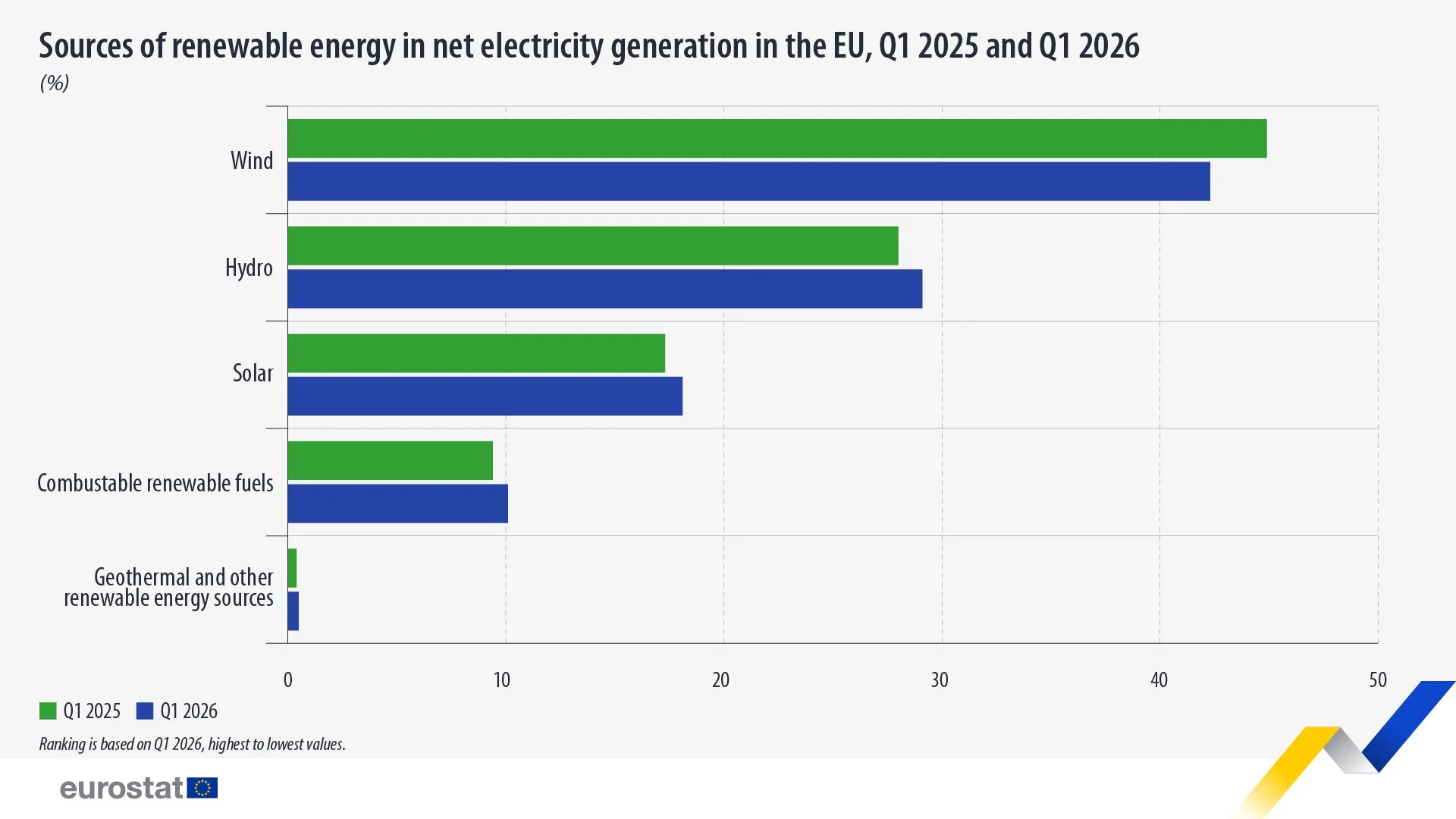
Eurostat, Source dataset: nrg_cb_pem
Among EU member states, Denmark recorded the highest share of electricity generated from renewable sources at 90.0%, followed by Portugal (82.9%) and Lithuania (75.7%). At the opposite end of the rankings were Czechia (12.7%), Malta (13.0%) and Slovakia (17.2%).
The latest figures highlight the EU's continued shift towards renewable electricity generation, even as natural gas remains an important part of the region's energy mix and coal use continues to fall.