
Balancing Land Use in England: Energy, Food and the Future
England has around 130,000 square kilometres of land, but the demands on it are growing. More homes are needed, clean energy must be expanded, food production maintained, and nature restored—all within a finite space. The government’s new Land Use Framework sets out how these competing pressures can be managed more effectively through better planning and coordination.
A key part of this vision is the expansion of clean energy. By 2030, the UK aims for around 95% of electricity to come from low-carbon sources, improving energy security and reducing exposure to volatile fossil fuel prices. This will require continued growth in renewable energy, alongside investment in electricity networks and infrastructure.
Despite this expansion, renewable energy is not expected to dominate land use. Solar and wind are projected to take up a relatively small share of England’s land overall, challenging the idea that clean energy comes at the expense of farming or other uses.
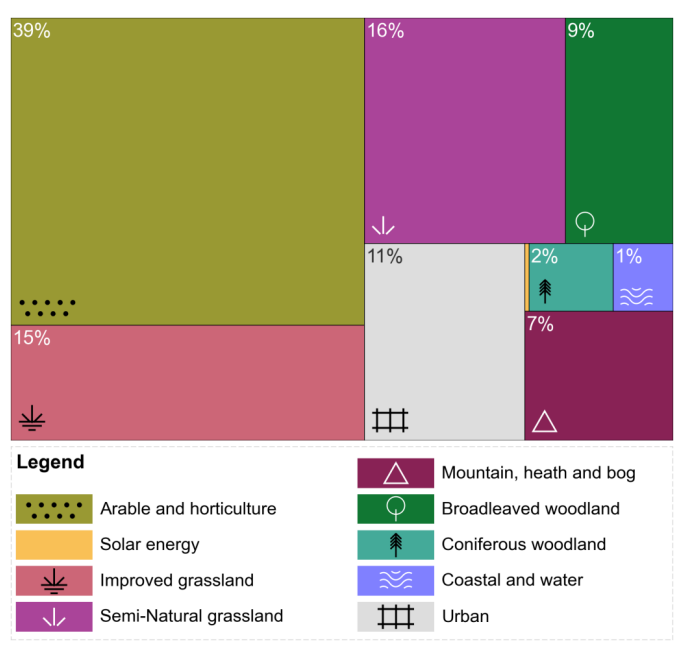
Instead, the framework emphasises multi-use land. Renewable energy projects are increasingly being designed to work alongside existing activities. Solar farms, for example, can support grazing livestock, while some developments can contribute to environmental goals such as restoring peatland. This approach allows land to deliver multiple benefits at once, rather than forcing trade-offs between energy, agriculture, and nature.
Better planning of infrastructure is another major focus. Coordinated development of the electricity grid is expected to unlock investment in rural areas, improve connections between supply and demand, and support new industries. This could also create opportunities for more efficient food production, such as energy-powered glasshouse farming.
Looking further ahead, the framework outlines a longer-term shift toward an energy system based largely on renewables and nuclear by 2050. Wind and solar infrastructure is expected to become more efficient over time, while expanded grid networks will better connect communities, industry, and offshore energy sources.
Overall, the message is one of integration rather than competition. Land is limited, but with the right approach it can support energy generation, food production, and environmental goals at the same time. The challenge is not simply how land is used, but how well those uses are planned and combined.